Builders
 Carpenters
 Electricians
 Flooring Specialists
 Gardeners
 Handymen
 Heating Engineers
 Painters & Decorators
 Plasterers & Renderers
 Plumbers
 Roofers
 Tilers
 my
myKitchen Cabinet Installation Cost
At a Glance
- The average cost of replacing kitchen cabinets is around £3,000.
- The job will take approximately 5 days to complete.
- A complete breakdown of kitchen cabinet prices by kitchen size and unit type.
- How long fitting kitchen units takes and an overview of the process involved.
- How to find and hire a local kitchen fitter using MyJobQuote.
Get free estimates
Are you a trade? Get more work today!
£3,000
Table of Contents
How Much Do Kitchen Cabinets Cost to Install?
Kitchen cabinets (or cabinetry) are often the focal point of your kitchen, but with so many designs to choose from it can be a little overwhelming to find the right units for your kitchen.
They also make up the bulk of the kitchen and although each unit isn't necessarily expensive, given the average kitchen will contain a number of units, the cost can soon add up to a substantial amount. The doors, drawers, fixings, and facings can easily be changed to update the look of a kitchen.
Which style of kitchen cabinets would you like installed?
Particleboard (budget-friendly)
1 votes - 14%14% of votes
MDF (including laminated)
3 votes - 43%43% of votes
Plywood (or other engineered wood)
2 votes - 29%29% of votes
Solid wood
1 votes - 14%14% of votes
Other (glass, metal etc)
0 votes - 0%0% of votes

7 votes
See results
Hide results
The company supplying the actual units may well offer a kitchen fitting service, but do not simply accept their price straight away. Whether you're just replacing units or planning a wider kitchen remodelling project, always get at least three quotations. Finding local tradesmen to offer quotations is quick and easy using the free service provided on this website.
Simply post the details of the job you need completing along with contact details for your potential kitchen fitter, then sit back and let up to 3 local tradespeople get in touch to provide written quotations.
I'm getting quotes to replace my kitchen and want to know what's a fair price to expect. Is there a rough per square metre rate that tradesmen use for this type of job?
"Expect to pay around £100 per cabinet or £300 per day. Most fitters will be happy to price from your supplier's CAD drawings if you e-mail them. If the quote suits, they will then visit to double-check measurements and fine-tune the quote."
Kitchen Unit Installation Prices
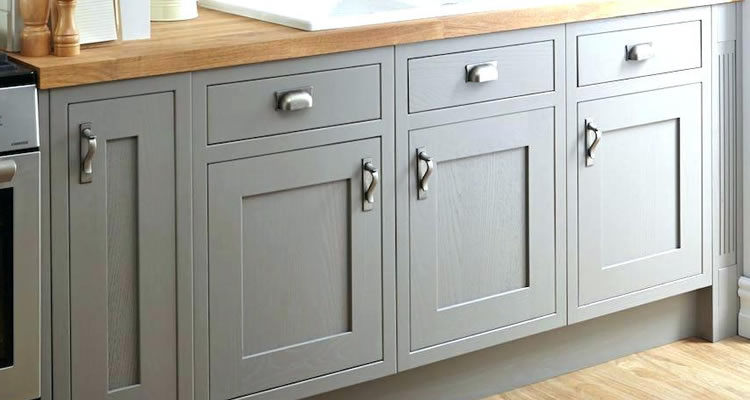
The cost of new kitchen cabinets will mainly depend on how big your kitchen is.
Estimated figures in the table below are a handy guide to kitchen unit prices including both supply and labour.
At the lower end of the scale, you can expect to find cabinet prices based on flat-pack delivery. As a general rule, rigid-built kitchen cabinets are more likely to be at the higher end of the estimations:
| Kitchen Size | Total Cost |
|---|---|
| Small (8–10 units) | £1,600–£3,000 |
| Average (11–15 units) | £2,200–£4,300 |
| Large (16+ units) | £3,500–£6,000 |
Want a custom price?
Post your job
How Much Does Kitchen Unit Fitting Cost?
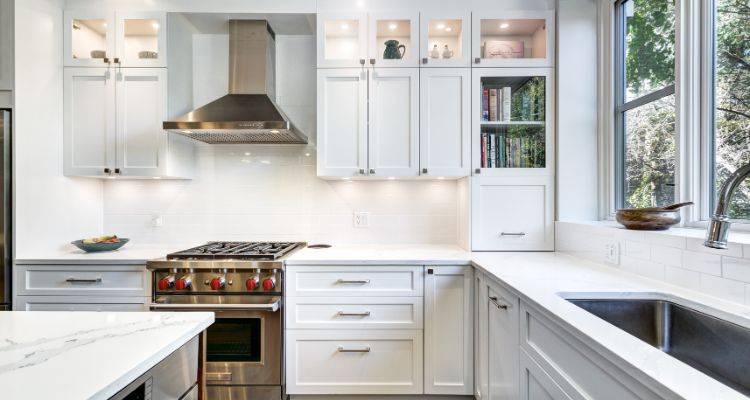
The average cost for kitchen units is around £3,000 (on the assumption you are replacing them all in one go).
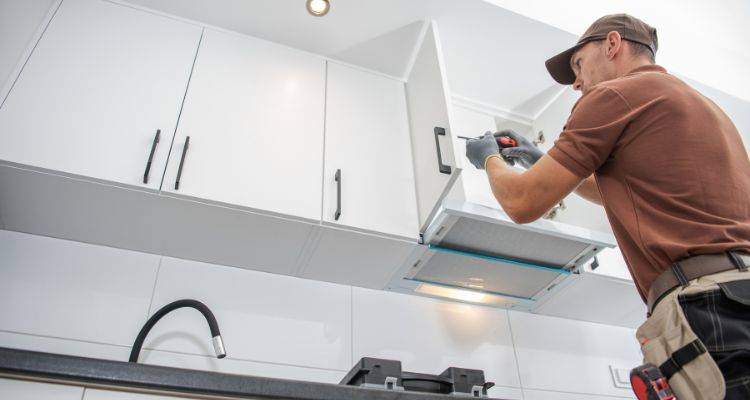
The vast majority of those installing new kitchen cabinets will require the services of a local joiner or kitchen fitter. When it comes to prices for fitting kitchen units it is also best to shop around.
The typical kitchen fitter will charge around £150 to £250 per day, so if two tradesmen are required, you can expect to pay an average cost in the range of £300 to £500 per day.
Your overall kitchen cabinet costs will depend on how much work is involved. Here's a guide:
| Kitchen Size | Duration | Labour Cost Per Kitchen Fitter |
|---|---|---|
| Small | 3 days | £450–£750 |
| Average | 4 days | £600–£1,000 |
| Large | 5 days | £750–£1,250 |
Want a custom price?
Post your job
As the table shows, the average cost of replacing kitchen cupboards is heavily based on labour fees.
With that in mind, it's worth deciding how you want to pay to fit a kitchen:
- Labour only — you buy the units yourself and the fitter installs them, which usually works out cheaper.
- Supply and fit — the fitter provides the units as well as installing them, so it's worth checking which your quote covers.
Also, if you live in areas such as London and the South East, as a general rule, the average cost of labour will be higher. As such, you will need to factor this into your budget when pricing up the installation of your new kitchen cabinets.
However, when it comes to having a good kitchen installation, it's always worth paying a little more for a professional kitchen fitter to ensure the work is carried out to a high standard.
Things to Consider When Installing Kitchen Cabinets
There are ways of keeping kitchen renovation costs down, although these may involve compromises on your original vision. However, that doesn't always mean downgrading from a complete kitchen refurbishment.
Having said that, simply getting the casings fitted and using the old worktops can save a fortune, especially if you have marble or granite worktops which can cost upwards of £2,500. Keeping them also avoids replacing kitchen worktops, which costs around £600 on average.
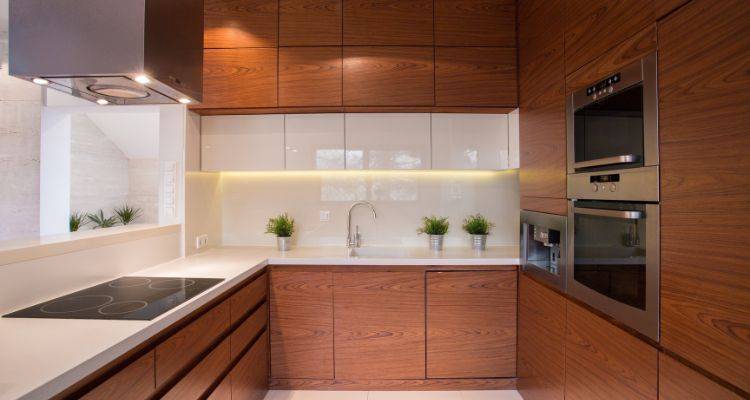
Kitchen Design
The more straightforward a kitchen design is, generally speaking the cheaper the new kitchen installation costs will be. For example, standard wall cabinets are not as expensive as special rounded corner cabinets or cabinets with a glass inlay.
You should expect to pay around £4,000 for a range of good quality cabinets for an average-sized kitchen fitting. However, choosing non-standard cabinets to make the best use of every available bit of kitchen space can easily double this cost, so be careful when planning to avoid costs spiralling out of control.
Electrics
When planning to remodel a kitchen, try and keep all the appliances in their original positions if possible. Having to ask a kitchen fitter to move or install new appliances generally involves electrical wiring, which will actually require a qualified electrician and can add up to £1,000 to the final cost.
Plumbing
As with the electrics, you should do the same when it comes to appliances that need plumbing access (such as the washing machine or dishwasher). If you factor this into the overall kitchen design, you can also add any new appliances in a way that will keep any additional plumbing work to a minimum.
Flooring
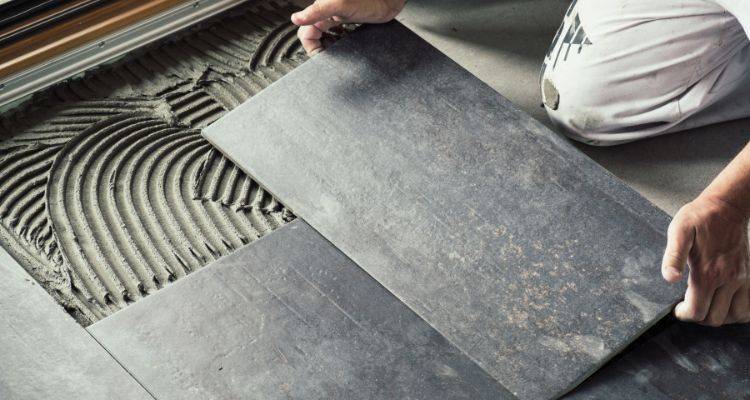
Don't forget to add in new kitchen flooring when working out the cost of the project. As even if you want to keep the existing flooring, removing old cabinets will likely damage the flooring anyway so better to include new flooring into the budget!
Luckily, there are many fairly cheap flooring options which still look great, such as laminate or vinyl products that are a popular choice for a standard kitchen fitting. With an array of effective finishes and styles available, you can do a decent job of emulating more expensive wooden flooring or stone tiles extremely well.
Tiling Walls
When adding new cabinets they may not be the same size as the previous ones, which brings with it various factors to consider. Your kitchen fitter will need to ensure they are still an appropriate size, especially if you only have a small kitchen to start with. Once it's been established where they are being positioned, tiles can easily become damaged in the process.
It's an extra cost that can easily be overlooked, but factoring in tiling walls, which costs around £585 on average, as part of your kitchen installation costs is an integral part of the finishing touches. It will help your kitchen cabinets stand out, as well protect your walls and ensure they look as good as new.
Flat-Pack vs Rigid-Built Kitchen Units
The two most common types of kitchen cabinets are flat-pack and rigid-built units, though you can also have units made to measure by a cabinet maker. The type you choose will make a big difference to your new kitchen quote, as well as the cost and quality of the product.
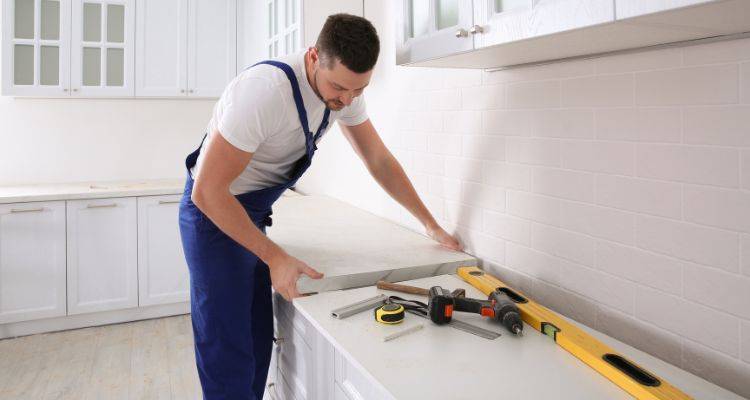
Flat-Pack Units
As the name suggests, these are units provided in boxes that need to be self-assembled ahead of your new kitchen installation.
Here are some pros and cons to bear in mind:
Pros
- ✔ Cheaper option than rigid-built units.
- ✔ Easy to transport.
- ✔ Available from national retailers.
Cons
- ✖ Need to be assembled on-site.
- ✖ Poor assembly can lead to problems later.
- ✖ Joints may weaken over time.
- ✖ Less customisable.
Rigid-Built Units
Also known as pre-assembled kitchen cabinets, rigid-built units are delivered fully assembled and simply need to be professionally installed. As they are already manufactured as complete units, they are often considered to be higher quality than cabinets made to be self-assembled at home, although this can still depend on the individual scenario.
Again, there are pros and cons to be aware of:
Pros
- ✔ Faster to install.
- ✔ More durable than flat-pack units.
- ✔ More custom options available.
- ✔ Often higher quality.
Cons
- ✖ More expensive option.
- ✖ Bulky to transport.
- ✖ Not a great choice for DIY.
- ✖ Bespoke orders can take time.
Made-to-Measure Units from a Cabinet Maker
If you want something tailored to your space, a cabinet maker (also called a cupboard maker) builds made-to-measure units to fit your kitchen exactly. It makes the best use of awkward layouts and lets you pick your own materials, finishes, and hardware, though it's the most expensive of the three options.
As with the other options, there are pros and cons to weigh up:
Pros
- ✔ Built to fit your exact layout.
- ✔ Widest choice of materials and finishes.
- ✔ Makes use of awkward or non-standard spaces.
- ✔ Often the highest quality and most durable.
Cons
- ✖ The most expensive option.
- ✖ Longer lead times.
- ✖ Not suited to DIY installation.
- ✖ Costs vary widely between makers.
Because each unit is custom-built, made-to-measure cabinets sit above the standard flat-pack and rigid-built prices, and the final cost depends heavily on the materials and size of your kitchen. It's worth getting a few quotes so you can compare cabinet makers on a like-for-like basis.
How much would it cost to fully fit a kitchen — worktops, cupboards and an island — for the installation only, not the materials?
"It all depends on the number of units, worktop joints, whether it's flat pack, appliance cut-outs, and if you have an island — and whether it's just dry-fitted or fully fitted. Without knowing that, it can vary anywhere between £700 and £5,000."
Doing It Yourself
With the right joinery skills and experience, fitting new cabinets yourself can often be a good way to save money. However, it is often a bit ambitious for the average DIY enthusiast.
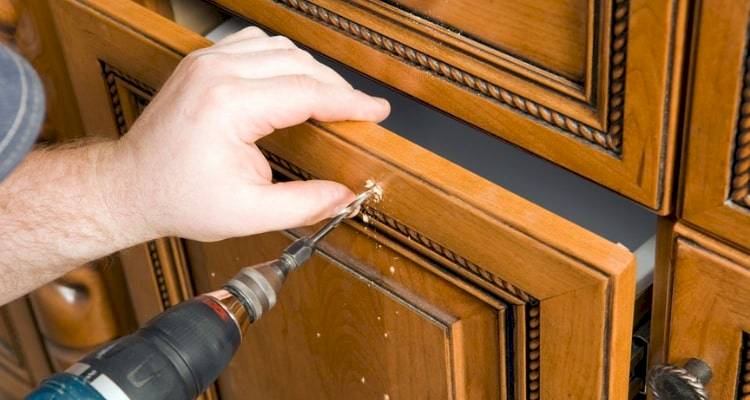
This is especially true when installing kitchen cabinets near gas or electric, and you certainly shouldn't touch these unless you are qualified, as one mistake can potentially prove fatal.
You can however go ahead with removing old units and dispose of any waste, but you will probably still need to pay a kitchen fitter to install any replacements. If your existing units are in good condition, painting the cabinets is a cheaper way to refresh them than a full replacement.
Checklist: Kitchen Unit Installations in the UK
When hiring a kitchen fitter to install your units, there are a number of points to consider:
- Are there any aspects you can do yourself? Kitchen cabinets make up the bulk of any kitchen fitting, yet removing the old cabinets yourself is a great money-saver.
- What additional costs are there to consider? Unless advised differently by your kitchen fitter, you can assume you will need to install new flooring when replacing kitchen cabinets and potentially replacing work surfaces at the same time. However, you can potentially avoid moving appliances and plug sockets to save on needing any electrical work.
- Have you requested more than one quote? It's recommended to seek out at least three separate quotes, and with the help of MyJobQuote you can do so without any obligation to continue. Always ensure any kitchen fitter quotes are in writing and include a breakdown of the work involved to avoid any hidden costs.
- Is waste removal included? One important factor to consider, is whether your chosen tradesmen will dispose of the old units and any other debris created during the installation. Even if you've already removed old units yourself, there's plenty of other rubbish that will need clearing afterwards.
- Do they have examples of previous work? Check for a kitchen fitter that has a strong online presence and a high-quality MyJobQuote profile. Ask for their experience and details of any recent work as well as photos. Search for reviews and ask friends and family if they have any recommendations.
- Are they covered by public liability insurance? Although not a legal requirement, it is something worth asking. The majority of reputable companies and tradesmen will be insured in the event of accidental damage or personal injury. This not only covers your kitchen fitter, but also yourself and the property being worked on. Additionally, enquire about a warranty for once the work is completed.
Ask a Trade
Got a question that only a tradesperson can answer? We have thousands of trades ready to answer any question you may have.
Ask your question

FAQs
Why Buy New Made-to-Measure Kitchen Cabinets?
The kitchen space is often the heart of the home where many of us spend quality time with our families, so if there's a room worth spending money on, it's a new kitchen fitting! You can design your kitchen renovation around the shape and your requirements so that no area is wasted and create as much storage and worktop space as you need.
Which Kitchen Unit Materials Are the Most Durable?
This can depend on the quality of your cabinets. Most commercially available kitchen cabinets are made from engineered wood, such as chipboard or MDF, with a variety of finishes. Solid wood is another option (albeit more expensive) which with proper maintenance, can be highly durable and last much longer. Choosing a reputable brand and checking material specifications can help ensure your kitchen cabinets last for many years.
What's the Best Thickness for Durable Kitchen Units?
In general, an experienced kitchen fitter is likely to advise those between 15mm and 18mm thick are often considered good quality for kitchen cabinets, with 18mm options normally offering long-term qualities. However, 15mm thickness is perfectly fine for everyday use, although an extra 3mm can make all the difference.
Do I Need Planning Permission to Replace Kitchen Cabinets?
Replacing or upgrading your kitchen cabinets and units doesn't usually require planning permission, even if your new kitchen fitting is part of a complete refurbishment. However, listed buildings sometimes require consent from your local council, regardless of whether you're only working on a small kitchen. As for building regulations, this applies when any electrical, plumbing, structural, or ventilation work is required as part of the installation.
How Do I Dispose of Old Kitchen Cabinets Responsibly?
When removing kitchen cabinets yourself, selling them or donating to charity is an option providing they are in a reusable condition. Alternatively, take them to a recycling depot and check upon arrival that they won't go into landfill or simply contact your local council for advice beforehand. If you hire an eco-friendly kitchen fitter, they may offer environmentally friendly waste removal as part of your kitchen installation costs.