Builders
 Carpenters
 Electricians
 Flooring Specialists
 Gardeners
 Handymen
 Heating Engineers
 Painters & Decorators
 Plasterers & Renderers
 Plumbers
 Roofers
 Tilers
 my
myLoad Bearing Wall Removal Cost
At a Glance
- The average cost of removing a load bearing wall is around £1,500.
- The job will take around 1 to 3 days to complete.
- A full pricing breakdown for load bearing wall removal, including supply costs, labour, and hidden extras.
- How long the job takes, what the process involves, and which trades you'll need to hire.
- How to find and hire a tradesperson to remove a load bearing wall using MyJobQuote.
Get free estimates
Are you a trade? Get more work today!
£1,500
Table of Contents
- How Much Does It Cost to Remove a Load Bearing Wall?
- What's Included in My Removing a Load-Bearing Wall Quote?
- Labour Cost to Remove Load Bearing Wall & Timescales
- Factors That Impact Load Bearing Wall Removal Costs
- Additional Load Bearing Wall Removal Costs
- What's Involved in Removing a Load Bearing Wall?
- How Can You Tell If a Wall is Load-Bearing?
- Do I Need an RSJ Beam?
- Benefits of Removing a Load Bearing Wall
- Checklist: Hiring a Tradesperson to Remove a Load Bearing Wall
- FAQs
How Much Does It Cost to Remove a Load Bearing Wall?
Do you need to remove a load bearing wall?
The average cost to remove a load bearing wall is around £1,200 to £1,750.
What is your biggest concern when planning a load-bearing wall removal?
Overall cost of the removal project
5 votes - 29%29% of votes
Structural safety/damage
8 votes - 47%47% of votes
Planning permission and/or building regulations
2 votes - 12%12% of votes
Time and disruption caused
2 votes - 12%12% of votes

17 votes
See results
Hide results
When you hire a professional builder to do the job, the supply of materials, including the RSJ beam, is typically included in your quote. The tables below break down those costs in more detail.
Load Bearing Wall Removal Prices
Below is a list of the average costs of removing a load bearing wall:
| Job | Cost | Duration |
|---|---|---|
| Single Doorway (roughly 1m) | £1,000 – £1,500 | 1 – 1.5 days |
| Double Doorway (roughly 2m) | £1,250 – £1,750 | 1.5 – 2 days |
| Large Open Plan (roughly 4m) | £2,400 - £3,000 | 2 – 3 days |
Want a custom price?
Post your job
If you're looking to knock through a wall between a kitchen and dining room, a double doorway opening (around 2m) is usually the most relevant size for this type of job, costing around £1,250 to £1,750.
Supply Cost of Removing a Load Bearing Wall
Below is a list of supply costs for removing a load bearing wall:
| Material | Cost |
|---|---|
| Rolled Steel Joist (RSJ) | £300 – £1,200 |
| Concrete Lintel | £40 – £150 |
| Steel Lintel | £50 – £300 |
| Padstones | £50 - £200 |
What's Included in My Removing a Load-Bearing Wall Quote?
To help you budget for your load bearing wall job, here's what's commonly included in your quote - and, crucially, what isn't:
- Supply of RSJ
- Labour
- Structural engineer calculations
- Waste removal
Here's what isn't typically included in a load bearing wall removal quote:
- Electrical, plumbing, or gas work
- Plastering and decorating
- Repairs to flooring
Labour Cost to Remove Load Bearing Wall & Timescales
Most of the work of removing a load bearing wall can be carried out by an experienced local builder. Depending on the size of the opening, the job typically takes 1 to 3 days.
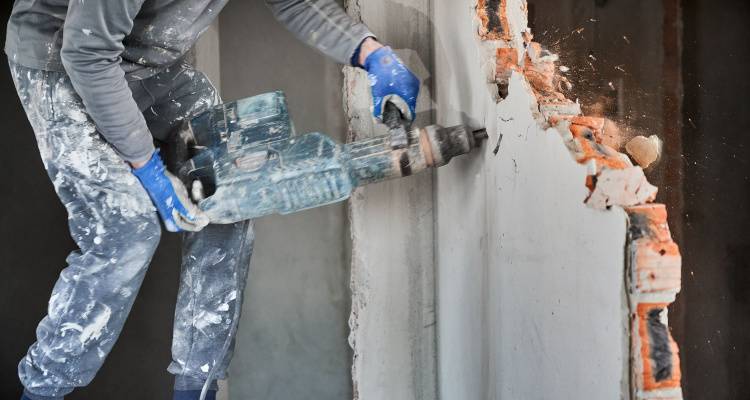
Builders will usually work in pairs on this type of job. You'll also need a structural engineer to calculate the correct RSJ size, and depending on where the wall sits, a plumber or electrician may be required too. A plasterer is almost always needed once the wall has come down.
| Trade | When Needed | Typical Cost |
|---|---|---|
| Builder (pair) | Main demolition and RSJ installation | £150–£250 per day, per person |
| Structural engineer | RSJ calculations and building regulation sign-off | £90–£200 per hour |
| Plasterer | Finishing walls and ceiling after removal | £150–£250 per day |
| Electrician | If the wall contains sockets or lighting circuits | £50–£95 per hour |
| Plumber | If the wall contains pipework or a radiator | £150–£400 (to move a radiator) |
Want a custom price?
Post your job
Factors That Impact Load Bearing Wall Removal Costs
Several factors affect the cost of removing a load bearing wall. Below is a list of the cost factors that you need to be aware of:
Size of the Job
The size of the job can affect the overall cost, as the bigger the job, the more you can expect to pay for the work.
If you want to knock down a wall to create more open space, this can cost around £2,400 to £3,000. Whereas, by knocking through a single doorway, you can expect to pay around £1,000 to £1,500.
Location of Property
The location of your property can affect the overall cost of the job.
Those located in London may expect to pay around 20% to 40% more for the overall job than those located in the north or other parts of the UK.
Type/Size of RSJ Beam
RSJ size depends on the dimension of the wall that you’re knocking through.
If you're knocking through a single doorway, expect your costs to be lower compared to those of a large open plan space.
Waste Removal
There will be a lot of waste removal involved in a load bearing wall removal job. The amount will depend heavily on the size of the wall. However, the average cost for waste removal on this type of job is usually around £100 to £175.
Floor Levelling
Consider levelling off flooring, especially in older homes. Floors on either side may not align and may need levelling. This often costs around £10 to £25 per square metre. The actual cost will depend on the materials used.
Ask a Trade
Got a question that only a tradesperson can answer? We have thousands of trades ready to answer any question you may have.
Ask your question

Additional Load Bearing Wall Removal Costs
There are a number of additional costs that you may need to consider when it comes to removing a load bearing wall.
Below is a list of the additional costs that may accompany this type of job:
- Redecorating Costs — On average, a painter and decorator will charge around £150 to £400 per day. Prices in London are likely to be a little higher than this. The price you pay will depend on things such as your location, the size of the room, and your choices of decoration.
- Party Wall Agreement Costs — If you live in a terraced or semi-detached house, a party wall is jointly owned, so any changes to this wall will be subject to a party wall agreement. This involves hiring a professional surveyor who will usually charge around £120 to £250 per hour.
- New Door — If you have removed your wall so that you can add in a door, then you will need to budget for the cost of the door. The cost you pay for this will depend on the type of door that you choose. For example, a softwood door costs around £40 to £50, whereas a hardwood door will cost around £70 to £80 on average.
- Move a Radiator — After your load bearing wall has been removed, you may need to move a radiator. A professional plumber will usually charge around £150 to £400 on average to move a radiator, and the job will usually take around 2 hours.
- Reposition Light Switches and Sockets — To install a light switch or plug socket, an electrician will charge around £50 to £95 per hour. However, this may depend on your location and the difficulty of the job.
What's Involved in Removing a Load Bearing Wall?
You should always hire a professional to remove a load bearing wall for you.
Below is an overview of the steps that a professional builder and structural engineer will take:
Before the Job
- Initial Inspection - A structural engineer will carry out a survey on the wall to calculate the correct measurements for your supporting RSJ beam.
- Prep the Area - The room will be protected with plastic sheets, and cables/pipes will be isolated or rerouted.
During the Job
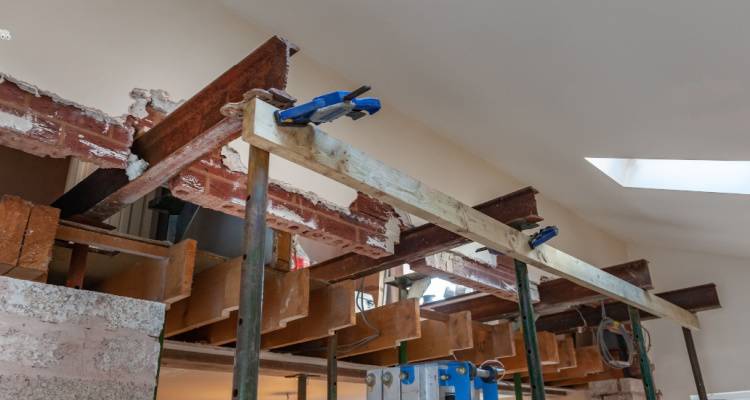
- Install Temporary Support - Acrow props will be installed to fully support the ceiling.
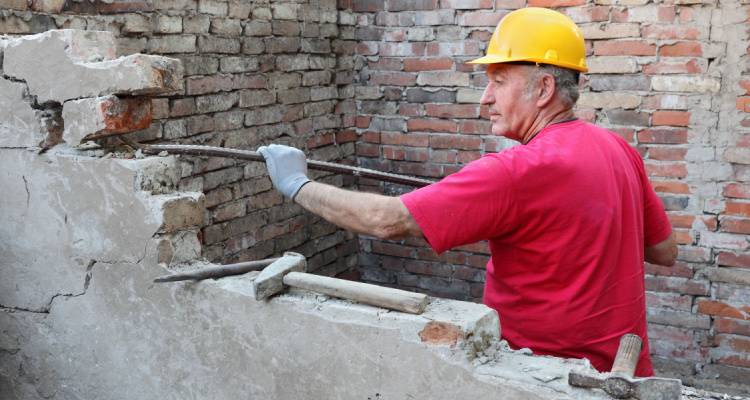
- Removal Begins - Starting at the top of the wall, a controlled demolition will start.
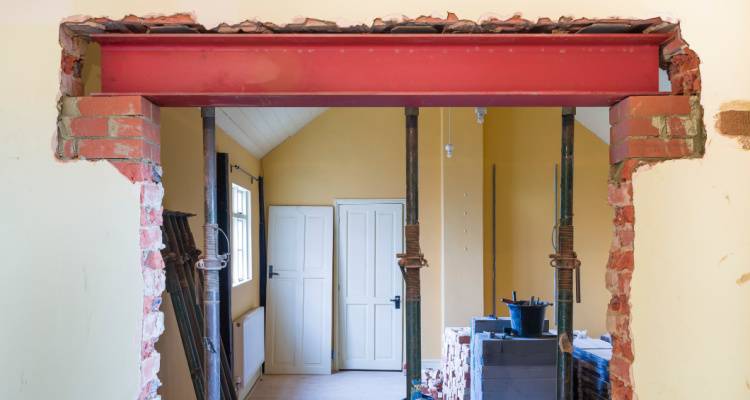
- Install Padstones and RSJ - Padstones are fitted, and the RSJ will be put into position on the padstones to the height and placement specified by the structural engineer's calculations, ensuring it is level.
- Make Good Around the Beam - Gaps will be filled with blockwork or brickwork to surround the RSJ ends to keep it in place.
After the Job
- Replastering and Finishing - Your plasterer can then re-plaster the ceiling and any parts of wall that are exposed, leaving you to decorate the room as you wish.
How Can You Tell If a Wall is Load-Bearing?
A load bearing wall supports the weight of a floor or a roof structure. You should always consult a professional to confirm whether a wall is load-bearing, but there are some useful signs to look out for beforehand. If you're also considering removing a partition wall, the process and costs are quite different.
Signs a wall is likely load-bearing:
- The wall runs perpendicular (at a right angle) to the floor joists above it.
- It sits in the centre of the house, running from front to back.
- There is a wall, beam, or column directly above or below it on another floor.
- It is an exterior wall — these are almost always load-bearing.
- It contains a steel beam or padstones, even if it appears to be a partial wall.
Signs a wall is probably not load-bearing:
- The wall runs parallel to the floor joists above it.
- It is a timber stud wall with no masonry.
- There is no wall directly above or below it on other floors.
- It was added as part of a later conversion or extension.
Bear in mind that partial walls can still be load-bearing if a builder installed a beam to carry the load above. Never assume a partial wall is safe to remove without a structural engineer's assessment.
Do I Need an RSJ Beam?
If you are removing a load bearing wall, you will need an RSJ beam.
A rolled steel joist is a steel beam which supports the weight above. The cost to install an RSJ is around £1,800 to £2,200.
When you remove a load bearing wall, you must replace it with an RSJ beam to take the weight of the rest of the home above. If not, you risk structural failure.
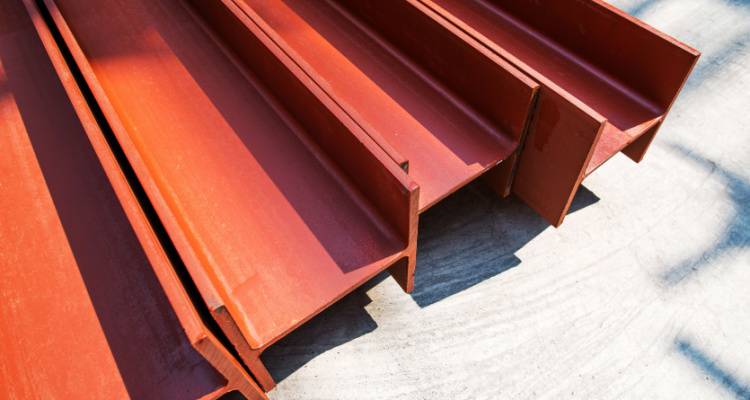
There are a number of different types of RSJ. The following list explains a little bit about each one:
- Universal Beams - Most common, used for supporting loads across openings.
- Universal Columns - These are thicker than universal beams, often used for vertical support.
- Parallel Flange Channels - These are U-shaped sections, used in lighter support or in tandem with other beams.
- Steel Lintels - Suitable for small openings like windows and doors.
Benefits of Removing a Load Bearing Wall
Removing a load bearing wall is a significant investment, but it can deliver real returns. Here are some of the main reasons homeowners take on the project:
- Open-plan living — Knocking through to create a larger, connected space is one of the most popular home improvements in the UK, particularly between kitchens and dining rooms.
- More usable space — Walls take up floor area. Removing one can meaningfully increase the size of a room without the cost of an extension.
- Increased property value — Open-plan layouts are in demand. A well-executed knock-through can make your home more attractive to buyers and add to its resale value.
- Better use of natural light — Combining rooms allows light to travel further through the property, reducing the need for artificial lighting.
Checklist: Hiring a Tradesperson to Remove a Load Bearing Wall
There are a few things you will need to consider before hiring someone to replace your load bearing wall. Below is a list of some of the main things that you should consider when looking for the right contractor for the job:
- What are their reviews like? Take a look at their customer reviews via their MyJobQuote profile to get an idea of past experiences.
- Do they offer an itemised cost breakdown? To understand exactly how much work there is to complete, you should always ask for a breakdown of costs so you can ensure you are paying a good price for each element of the job.
- What experience do they have? Specifically, find out if the contractor is experienced in removing load bearing walls, and their associated qualifications.
- Will waste removal be included in your quote? It's always best to double-check this to make sure you're not left with a pile of rubble and additional costs.
- Do they offer a warranty on their work? Find out if your chosen contractor offers any guarantees or warranties with their work before agreeing to work with them to ensure you're covered in the event of any issues.
FAQs
Can I Remove a Load Bearing Wall Myself?
This is not a job to tackle yourself. Removing a load bearing wall requires a structural engineer to calculate the correct RSJ size and a professional builder to carry out the demolition safely. Attempting it without the right support could cause serious structural damage, and the cost of putting things right will far exceed what you'd have saved.
A professional job also ensures you get the Building Regulation sign-off needed when you come to sell the property.
Do I Need Planning Permission to Remove a Load Bearing Wall?
You won't usually need planning permission to remove an internal load bearing wall, but you will need Building Regulation approval. The work can typically be completed on a building notice rather than full architectural plans. Building Regulation approval gives you a completion certificate, which you'll need when selling your home.
Do I Need a Party Wall Agreement When Removing a Load Bearing Wall?
If the wall you're removing is a party wall — one shared with a neighbour — you must comply with the Party Wall Act before work begins. Your neighbour must give their consent. If you can't reach an agreement, you'll need a party wall surveyor, which typically costs around £1,000. A party wall agreement itself usually costs around £1,250 to £1,500.
Will Removing a Load Bearing Wall Affect My Home Insurance?
Give your home insurer a heads-up before removing a load bearing wall. It counts as structural work, and some insurers require notification of major changes like this. Make sure your builder is properly insured, too, with both public liability and professional indemnity cover. And whatever you do, don't lose those Building Control certificates. When you come to sell, you'll need them to prove the work was done properly.
Will I Be Able To See the RSJ Beam After Installation?
Most RSJs are hidden behind plasterboard boxing, which creates a flush finish and meets fire regulations. This leaves a slightly lower ceiling section where the beam runs. You can leave beams exposed if you prefer that look, but check it meets fire safety rules first.
How Will Removing a Load Bearing Wall Affect My Heating?
A bigger room needs more heating. Your current radiators might not be sufficient, so you may need extra ones or a system upgrade. Talk to a heating engineer before you start to check that your system can handle it.
Can I Remove a Load Bearing Wall on the First Floor of a Multi-Storey House?
Yes, but it's harder than doing so on the ground floor. The beam carries more weight from above, so you'll need a bigger RSJ and more detailed calculations.